
End Range Is Where The Magic Happens In Baseball!
Jan 26, 2026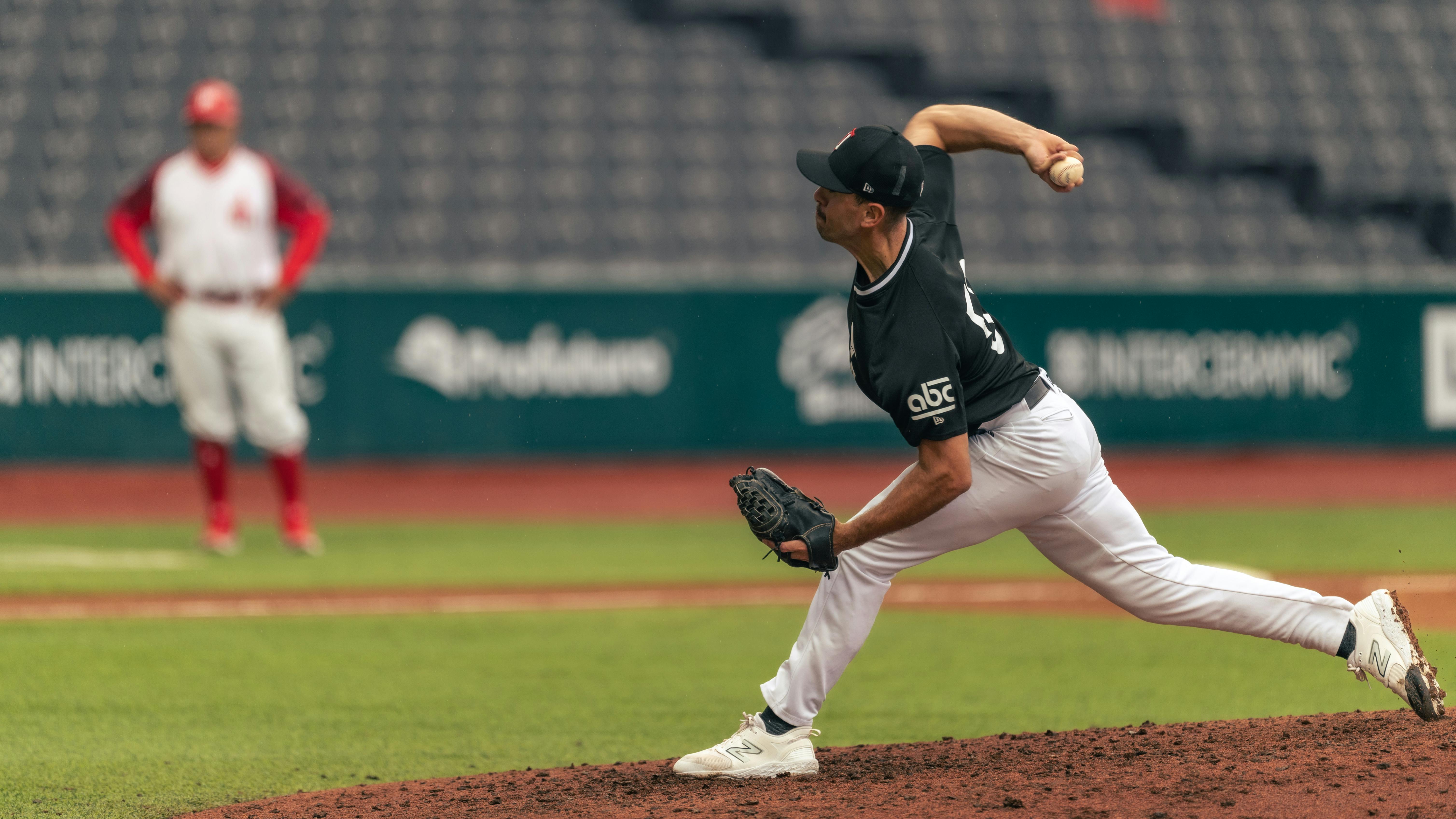
Why Controlling Extreme Shoulder Ranges of Motion Matters for Baseball Players
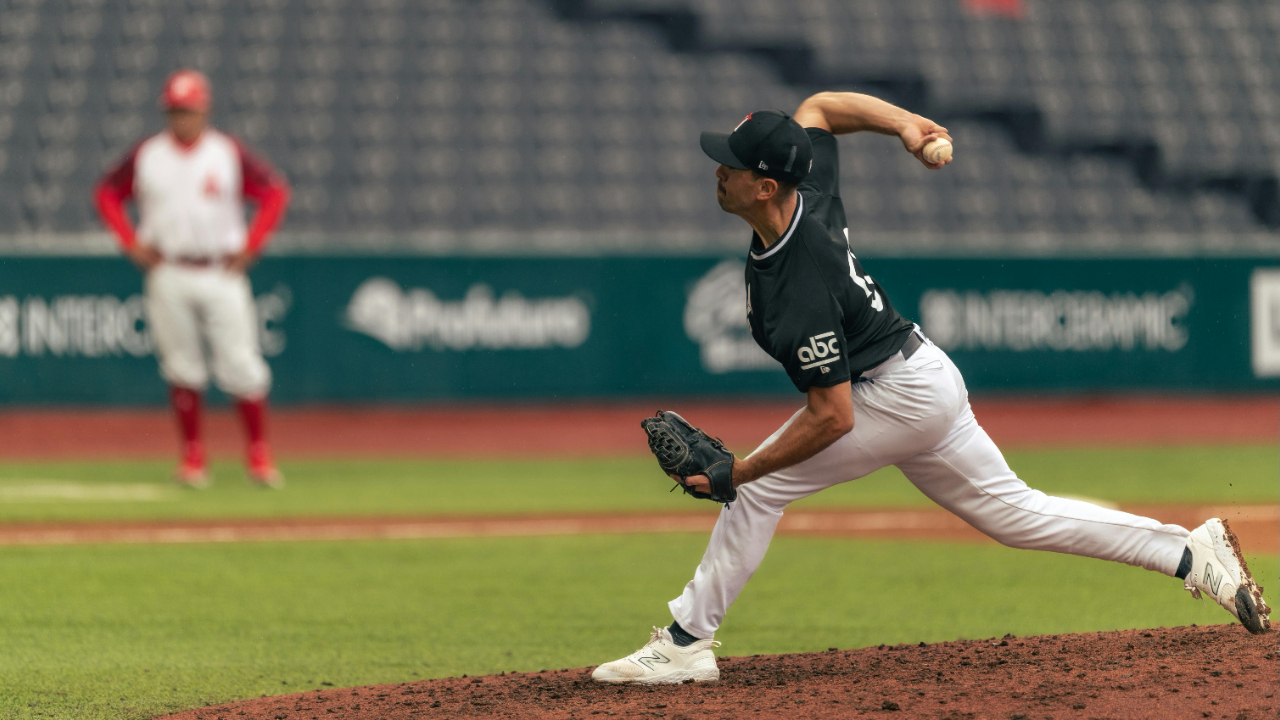
If you watch a high-level baseball player throw a ball in slow motion, one thing becomes immediately clear: the shoulder operates at the very edge of human capability. During the pitching motion, the shoulder reaches extreme ranges of external rotation, experiences tremendous forces, and then has to rapidly reverse direction to decelerate the arm.
As both a physical therapist and a performance coach, I can tell you this: it’s not the range of motion that gets athletes hurt — it’s the lack of strength and control within that range.
Extreme Range of Motion Is Not Optional in Baseball
Baseball places unique demands on the shoulder. Pitchers routinely achieve 170–180 degrees of external rotation, far beyond what the average person can access. "Normal" range of motion in a non-throwing shoulder can be anywhere between 85 to 110 degrees of motion. That is a massive difference that needs to be accounted for when it comes to training and recovery. This extreme mobility is often celebrated — and rightly so. Greater external rotation can contribute to higher throwing velocity. But mobility alone is only half the equation.
Range without control is a liability.
Strength and Stability Are What Protect the Shoulder
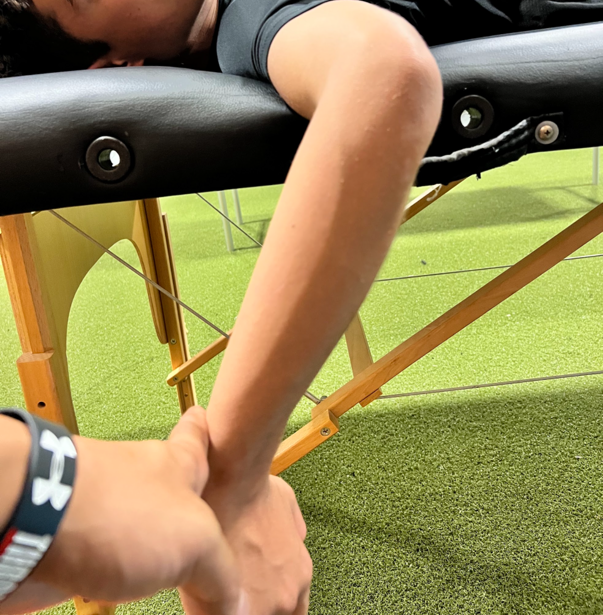
At extreme ranges of motion, the shoulder joint becomes inherently less stable. The ball-and-socket structure relies heavily on muscle strength, timing, and coordination — especially from the rotator cuff, muscles around the shoulder blade, and surrounding tissues.
When an athlete lacks strength in these end ranges, several problems arise:
-
The shoulder relies more on passive structures (ligaments, labrum, capsule) for stability
-
The rotator cuff cannot effectively center the humeral head (vital for shoulder health)
-
Deceleration forces overload tissues not designed to handle them repeatedly
Over time, this leads to breakdown.
From a performance standpoint, strength at extreme ranges allows an athlete to transfer force efficiently, maintain arm speed, and repeat mechanics under fatigue. From a rehabilitation standpoint, it’s what keeps the joint healthy under stress.
What Happens When You Don’t Have Strength at End Ranges?
This is where injuries often begin.
When a baseball player can reach extreme positions but cannot control or produce force there, the body compensates. Those compensations might show up as:
-
Pain in front of the shoulder
-
Posterior shoulder tightness
-
Loss of velocity or command
-
Elbow pain that “comes out of nowhere”
-
Labral irritation or rotator cuff symptoms
In many cases, the shoulder isn’t “too loose” — it’s underprepared.
Repeated exposure to high-velocity throwing without adequate end-range strength increases stress on the labrum, capsule, and biceps tendon. Eventually, the tissues fail not because the athlete moved too far, but because they weren’t strong enough to own that position. We also know that as you players continue to throw, the shoulder will naturally get looser so that becomes even more important to emphasize strength and control in the shoulder.
Control Equals Confidence and Durability
One of the biggest benefits of training strength at extreme ranges is confidence. Athletes who feel strong and stable at layback don’t subconsciously hold back. They move freely, aggressively, and efficiently.
Durability in baseball isn’t about avoiding range — it’s about earning it.
A well-prepared shoulder can:
-
Accept force at high speeds
-
Decelerate the arm safely
-
Repeat mechanics deep into a season
-
Adapt to workload increases without breaking down
Training the Shoulder the Right Way
Effective shoulder training for baseball players must go beyond generic band work and light weights. It should include:
-
Strength training at long muscle lengths
-
Controlled loading in external rotation
-
Scapular stability under dynamic conditions
-
Eccentric strength for deceleration
-
Progressive exposure to sport-specific demands
The goal isn’t just to move well — it’s to be strong where the game actually puts you.
Final Thoughts
Baseball demands extreme shoulder motion. That’s not changing. What can change is how prepared an athlete is to handle it.
As a physical therapist and performance coach, my job is to help players build strength, stability, and control at the edges of their motion — because that’s where the game is played, and that’s where injuries are either prevented or created.
Mobility opens the door. Strength keeps you in the game.
Questions about how we can help?
Leave us your questions below and we will respond ASAP!
We hate SPAM. We will never sell your information, for any reason.
